Total Pageviews

Sunday, October 27, 2013

Not Quite Worthy of St. Cecilia


When the Congregation for Divine Worship and the Discipline of the Sacraments released the revised Ordinary of the Mass to the English-speaking bishops conferences, it admonished composers to respect the sacredness of these words when setting them to music.  Composers like Scotsman James MacMillan took this wise counsel to heart when he set the text to music.  ICEL certainly upped the ante by including a chant setting for the revised Ordinary in the Third Typical Edition of the Roman Missal.

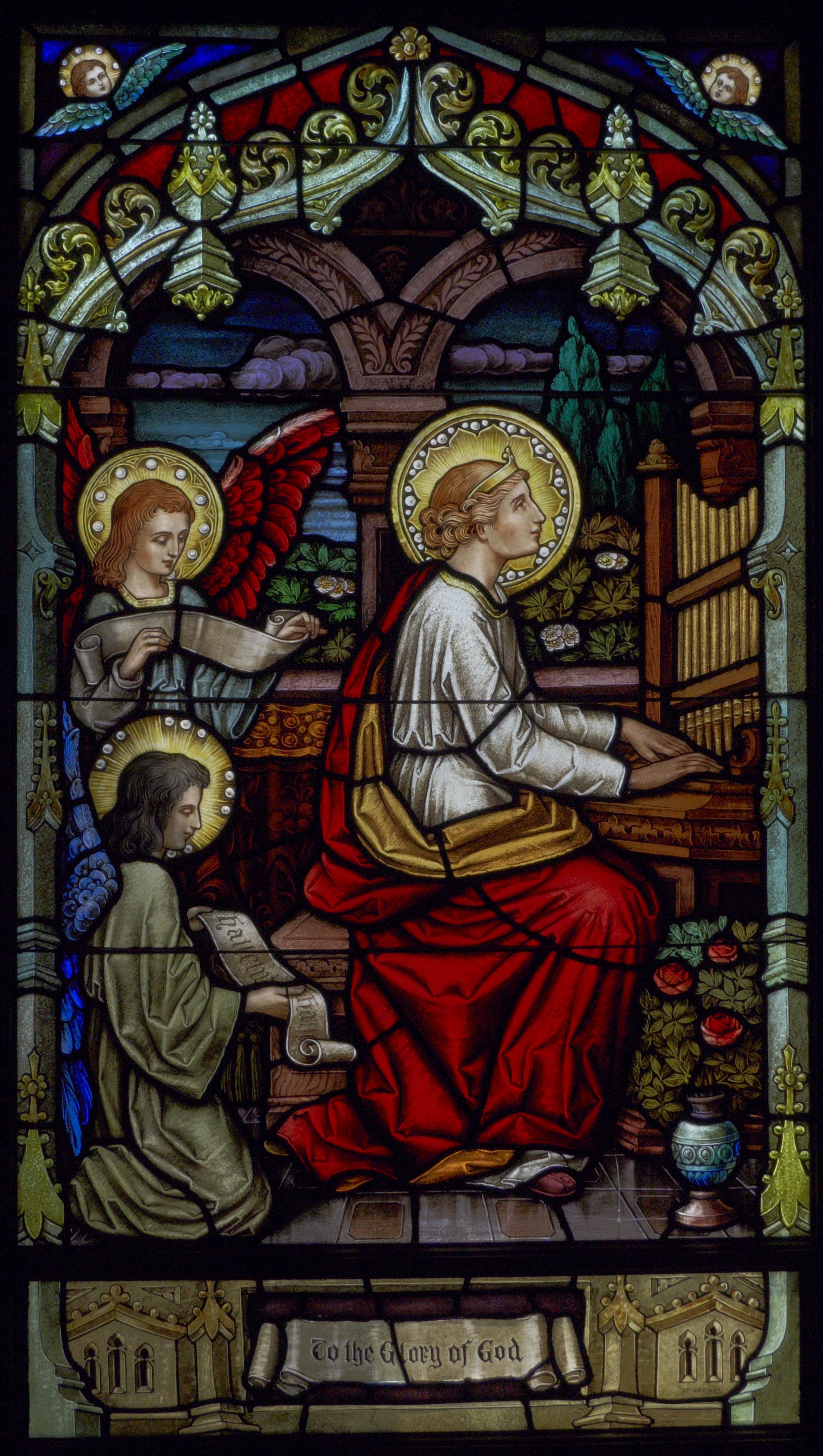
Lamentably, however, the CDWDS’s words were lost on the two largest liturgical publishing houses, GIA and Oregon Catholic Press (OCP). In the case of OCP, the publishing house’s much hyped “Misa Santa Cecilia”, which the company promotes as a vibrant bilingual setting with the correct words and approved by the USCCB, the setting, in my opinion, fails to live up to the directive from the CDWDS.

The setting seems to be faithful to the text.  This is certainly good, given OCP’s previous track record of taking liberties with both the English and Spanish texts of the Ordinary of the Mass. However, when it comes to the musicality, something seems to be amiss.

Here is what Sacramentum Caritatis urges musicians to do when composing music for liturgical use:

Certainly as far as the liturgy is concerned, we cannot say that one song is as good as another. Generic improvisation or the introduction of musical genres which fail to respect the meaning of the liturgy should be avoided. As an element of the liturgy, song should be well integrated into the overall celebration (128). Consequently everything -- texts, music, execution -- ought to correspond to the meaning of the mystery being celebrated, the structure of the rite and the liturgical seasons (129).
OCP implies that this bilingual setting celebrates Hispanic culture, calling the piece vibrant.  In fact, when reading through the description, I failed to find any usage of the word sacred.  OCP spent more time focusing on the culture that it failed to take into account the sacred nature of the text, completely ignoring Sacramentum Caritatis 42.

When I listened to the setting, all I could think about was Latin night on Dancing with the Stars.  At any moment, I was expecting Mark Ballas and Cheryl Burke to come out and do a Bolero dance during the Penitential setting and the Agnus Dei, or a Salsa number to the Gloria and the Sanctus. The settings for the Memorial Acclamation could either be a Paso Doble or a Rumba. 

Now, in fairness, I have also heard the setting in three different real-world experiences during Mass.  OCP tends to over-stylize its presentations using instruments that one would not normally encounter during Mass (drums, electric guitars, bass guitars and the like).  In my actual experience with the piece, I heard it on three separate occasions wherein the piano and the guitar were used and then with the organ.  I tried to be objective; however, even if the organist from St. Peter’s Basilica were playing the pieces, it would not change a thing: the composition is just bad.

Even the way the setting treats the wording is somewhat suspect.  When Pope St. Pius X wrote his Motu Propio on Sacred Music, Tra le Sollecitudini, he noted that:

(S)ince modern music has risen mainly to serve profane uses, greater care must be taken with regard to it, in order that the musical compositions of modern style which are admitted in the Church may contain nothing profane, be free from reminiscences of motifs adopted in the theaters, and be not fashioned even in their external forms after the manner of profane pieces.
6. Among the different kinds of modern music, that which appears less suitable for accompanying the functions of public worship is the theatrical style, which was in the greatest vogue, especially in Italy, during the last century. This of its very nature is diametrically opposed to Gregorian Chant and classic polyphony, and therefore to the most important law of all good sacred music. Besides the intrinsic structure, the rhythm and what is known as the conventionalism of this style adapt themselves but badly to the requirements of true liturgical music.
Inasmuch as some may argue that Pope St. Pius X wrote this admonition back in 1903, the problems that plagued the music used in the Church’s liturgy 110 years ago persist today.  Even Blessed John Paul II recognized this issue in 2003, when he wrote his Chirograph on Sacred Music:
12. With regard to compositions of liturgical music, I make my own the "general rule" that St Pius X formulated in these words:  "The more closely a composition for church approaches in its movement, inspiration and savour the Gregorian melodic form, the more sacred and liturgical it becomes; and the more out of harmony it is with that supreme model, the less worthy it is of the temple"[33]. It is not, of course, a question of imitating Gregorian chant but rather of ensuring that new compositions are imbued with the same spirit that inspired and little by little came to shape it. Only an artist who is profoundly steeped in the sensus Ecclesiae can attempt to perceive and express in melody the truth of the Mystery that is celebrated in the Liturgy[34].
OCP devotes so much time to promoting cultural diversity that it forgets the one aspect that sets liturgical music apart from the rest:  it is to be used in the service of the liturgy and not the other way around.  We are not here to celebrate one particular culture, or a mish-mash of cultures, as the late Fr. Richard John Neuhaus passionately lamented when going over the substandard musical selections that Pope Emeritus Benedict XVI was subjected to during the Mass at Nationals Stadium in April 2008.  Before we are anything else, we identify ourselves as Catholic.  Catholic means universal.  We do not splinter off into some cultural Tower of Babel when it comes to our liturgies.  We are supposed to be united as one in prayer. 
This is why bilingual Mass settings ultimately fail.  There is no unity when we split up the Ordinary of the Mass into two different languages.  In fact, Liturgicam Authenticam takes that point into strong consideration:
88. In the case of the Order of Mass and those parts of the Sacred Liturgy that call for the direct participation of the people, a single translation should exist in a given language,67 unless a different provision is made in individual cases.
What is the point, then, of having bilingual settings?  Why not promote the language that unifies all of us as children of the Church: Latin?  Yet, OCP has never offered anything new in Latin.  The publishing house is so busy promoting culture that it fails to realize that Latin is our liturgical heritage.
Then there is the issue of the responsorial Gloria.  This is a recent phenomenon, one that I have not even seen in Latin.  The problems with this type of a setting are that the piece chops up the Gloria, interrupting the flow of the prayer and it also unduly prolongs the introductory rite, turning the music into a performance.  Misa Santa Cecilia is also uses the same repetitive mechanism for the Sanctus and the Agnus Dei.  The latter seems to go into infinity.  It’s a double whammy of a bad piece that never seems to end.
If Spanish language congregations are in need of a setting of the Ordinary that fulfills Sacramentum Caritatis 42 and the prescriptions set forth by Pope St. Pius X, Blessed John Paul II and Liturgicam Authenticam, one need only look at the magnificent composition set forth by Fr. Matthew Spencer.  Fr. Spencer set the Spanish language Ordinary of the Mass using Jubilate Deo, the simple Latin Mass setting promulgated by Pope Paul VI.  One can find it here: http://marello.org/simplex/collections/ordinary-i/
OCP had the chance to promote the sacred and the majestic with its Misa Santa Cecilia.  Unfortunately, it does neither and fails to live up to the dignity of its namesake.


Sunday, October 20, 2013

An Open Letter to Archbishop Alexander Sample


Most Reverend and Dear Archbishop Sample:

Greetings in the name of our Lord, Jesus Christ!

I write this letter to you on behalf of many of us who have a deep regard for the Holy Sacrifice of the Mass and who seek to preserve its sacred nature.  In you, we have found a kindred spirit for you have done much in the way of restoring the sacred, especially where it concerns music, to the liturgies that were celebrated in your previous diocese.

You are now the Archbishop of Portland, which is the home to Oregon Catholic Press.  Many parishes, as you well know, make use of the musical offerings published by this organization.  While there may be some merit to the compositions, the rest, especially those meant for use in Spanish-language parishes, leave much to be desired when it comes to the sacred and have become a parody of what liturgical music is supposed to be.

I brought this to the attention of OCP on several occasions and have never received a suitable response.  Staff told me that it was simply my personal opinion.  When I asked if the composers have read the documents, I received a less than satisfactory reply.  The publishing house had not even heard of the Propers.

Your Excellency, in 2007, when Pope Emeritus Benedict XVI wrote Sacramentum Caritatis, he rightly observed that:


Certainly as far as the liturgy is concerned, we cannot say that one song is as good as another. Generic improvisation or the introduction of musical genres which fail to respect the meaning of the liturgy should be avoided. As an element of the liturgy, song should be well integrated into the overall celebration (128). Consequently everything -- texts, music, execution -- ought to correspond to the meaning of the mystery being celebrated, the structure of the rite and the liturgical seasons (129). 

Unfortunately, it seems to me that this section of the document is lost on OCP's editors and composers.  Many of the compositions, most especially the ones in Spirit and Song, "fail to respect the meaning of the liturgy", sounding more like something one would hear on a secular pop radio station than within the context of the Holy Sacrifice of the Mass.  The Spanish-language compositions, in my opinion, are slightly worse, employing musical styles that do not correspond to the sacred nature of the Mass.  I am also concerned with the texts, as some of the pieces focus more on the horizontal as opposed to the sacred.  One piece, "Pueblos Nuevos", seems to be tinged with Liberation Theology. 

The settings for the Ordinary of the Mass are also problematic.  The setting, especially the bilingual pieces, do not appear to respect the nature of Sacramentum Caritatis in musicality.  The bilingual Misa Santa Cecilia setting is one of the worst.  Music is supposed to be at the service of the Sacred Liturgy, not the other way around.  The setting does not reflect the sacred nature of the texts in either language.  

OCP's bilingual settings also appear to not respect Liturgicam Authenticam:


88. In the case of the Order of Mass and those parts of the Sacred Liturgy that call for the direct participation of the people, a single translation should exist in a given language,67 unless a different provision is made in individual cases. 

OCP promotes these bilingual settings as a means to unite congregations, but, it only serves to divide.  Their literature has never promoted the use of Latin in the Mass.  Latin is the unifying language because it is the Church's Mother tongue.  OCP, however, seems to ignore that fact.

Your Excellency, even OCP's Spanish-language settings for the Responsorial Psalm also have their share of problems.  Some of the styles employed are Ranchero and Bolero.  These are commonly heard on secular radio stations and the genre is far from sacred.  In fact, the tutorial recordings that OCP has use drums, bass guitars and other instruments to give a secular feel to the music. The psalms are as far away removed from chant as possible.   Furthermore, the revised Roman Missal has now included a full vigil Mass for the Solemnity of Pentecost; however, OCP continues to only provide for one option for the Responsorial Psalm and its disposable missallettes only have one option for the readings.  Last year, I addressed this problem with the OCP Spanish-language editor and he said that they would fix it.  When OCP released the new booklets, no changes were made and we were still stuck with one reading and one psalm (pre-selected by OCP).

Insofar as sacred music is concerned, OCP does not promote usage of traditional hymns such as "Let All Mortal Flesh Keep Silence", "Attende Domine", "Jesus Christ is Ris'n Today" and "Holy God, We Praise Thy Name".  Rather, its publication, "Today's Liturgy" primarily promotes OCP compositions such as "Sing a New Song", "Christ our Light", "I Will Choose Christ" and other questionable songs.  The Propers of the Mass are completely foreign to OCP.

Your Excellency, I realize that you have other concerns within your Metropolitan See.  However, because OCP is located within the territorial boundaries of the Archdiocese of Portland, the organization falls within your jurisdiction.  What OCP does not only affects Portland; it also impacts what happens throughout the United States.  I plead with you to please intervene and examine what OCP is releasing for use.  For many years, not a few of us have had to endure the onslaught of music that is neither sacred nor liturgically appropriate.  Please address this situation.  I realize that this cannot happen overnight; however, whatever liturgical renewal anyone can hope for will only be accomplished if the liturgical music lives up to that envisioned in Sacramentum Caritatis No. 42.

Thank you, beforehand, for your kindness in reading this letter. Please be assured of my prayers.  May St. Cecilia guide you.

Respectfully submitted,
Michelle Marie Romani


Thursday, July 4, 2013

What We Declare


When I was a high school junior, I had the opportunity to travel to Philadelphia to attend the Valley Forge Freedoms Foundation Youth Conference.  It was a for me in many ways:  my first flight, my first time away from home without the parents and my first time in another time zone.  I joined about 100 other high school kids from all over the United States to learn about freedom.  We toured Independence Hall, saw the Liberty Bell and then went on to Valley Forge.

While it was certainly moving to see these hallowed treasures of our nation's history, the most impacting part of the program involved a presentation from a former Soviet prisoner.  His name escapes me, but, his story bears repeating, especially now when our own freedoms are being threatened from within.

The man spent many years in a Soviet prison camp because he spoke out against the repression fostered by that government.  He told us that people had to worship in secret and they could not openly express themselves in disagreement with those in authority.  This was oppression at its worst.  He said that when he arrived in the United States, it was as though he were stepping into a dream land because of the immense freedom we enjoy.  The first thing he did was find a church where he could go and thank God.  The former prisoner said that only when he stepped into the tiny Catholic church could he fully experience freedom, where he could kneel in the presence of God in humble gratitude and in supplication for his homeland.

I stand some 28 years removed from that conference.  Oh how things have changed when that wide-eyed 17-year-old kid was listening to the former dissident, never thinking that the same thing could very well happen here in the land of the free and the home of the brave.  Sadly, we are seeing a slow erosion of our religious liberties, beginning with the ill-conceived HHS mandate.  Our freedom of religious conscience is being ignored and dismissed in the name of the god of political correctness.  Those who claim to be Constitutional law scholars engage in activities that violate the very basis of our Bill of Rights.  In fact, many of our founding citizens came to this country precisely because they yearned for the freedom of religion.  Catholics who were still being treated as second-class citizens by the British empire settled in Maryland (which, if I understand correctly, is named after no less than the Blessed Virgin Mary, herself).  Freedom of religion is fundamental.  It is not merely restricted to worshipping as our Church dictates; it also means being able to freely express that belief in the public square.

The Founding Fathers probably never envisioned that, some 237 years after Thomas Jefferson penned the Declaration of Independence, the nation would be faced with a growing cancer from within that would chip away at the very freedoms they fought to establish.   As Founding Father John Adams once noted, "Our Constitution was made only for a moral and religious people.  It is wholly inadequate to the government of any other."

Despite his flawed theology, Thomas Jefferson wrote the Declaration of Independence with the belief that Someone greater than ourselves is the sole guarantor of our liberties:


When in the Course of human events, it becomes necessary for one people to dissolve the political bands which have connected them with another, and to assume among the powers of the earth, the separate and equal station to which the Laws of Nature and of Nature's God entitle them, a decent respect to the opinions of mankind requires that they should declare the causes which impel them to the separation. 
We hold these truths to be self-evident, that all men are created equal, that they are endowed by their Creator with certain unalienable Rights, that among these are Life, Liberty and the pursuit of Happiness.
Notice that the first right endowed by our Creator is LIFE. Jefferson did not qualify that statement to mean only those who are born or those who are free or those who belong to other categories. Interestingly enough, St. Paul never made any distinctions among those who are called by Christ (there are no Jews, no Greeks, no slave, no freed; we are all one Body).  The right to LIFE applies to ALL, the born and the unborn, the very young and the very old. It is the most fundamental right because it is the primal one.

Outside my window, the fireworks are beginning to burst forth into the night sky.  Hues of red, white and blue are sailing through the darkness.  Americans of all stripes are celebrating the freedom of which Jefferson wrote and for which Washington fought.  That battle continues even to this day; however, instead of being waged on the battlefield against an oppressive kingdom, it is now being fought in legislative chambers and in courts of law.

On this July 4th, in the Year of Our Lord, 2013, I leave with one final quote, this time, from the prayer that Archbishop John Carroll penned on November 10, 1791, a prayer which still forms an integral part of the Masses we celebrate both on Independence Day and Thanksgiving:
We pray  you, O God of might, wisdom, and justice, through whom authority is rightly administered, laws are enacted, and judgment decreed, assist with your Holy Spirit of counsel and fortitude the President of these United States, that his administration may be conducted in righteousness, and be eminently useful to your people, over whom he presides; by encouraging due respect for virtue and religion; by a faithful execution of the laws in justice and mercy; and by restraining vice and immorality. Let the light of your divine wisdom direct the deliberations of Congress, and shine forth in all the proceedings and laws framed for our rule and government, so that they may tend to the preservation of peace, the promotion of national happiness, the increase of industry, sobriety, and useful knowledge; and may perpetuate to us the blessing of equal liberty.

We  recommend likewise, to your unbounded mercy, all our fellow citizens throughout  the United States, that we may be blessed in the knowledge and sanctified in the  observance of your most holy law; that we may be preserved in union, and in  that peace which the world cannot give; and after enjoying the blessings of  this life, be admitted to those which are eternal.
May God bless this union we call the United States of America and may He bless my beloved Texas, whose Legislature is debating the very issue of life.  May He touch the hearts of our 181 lawmakers, reminding them that, in the final analysis, it matters not if one stood with their party; rather, that they stood with Christ.

Tuesday, July 2, 2013

Liturgical Javert? Not really


Whenever I work late, I usually catch "The Busted Halo" program on my Sirius XM radio.  Hosted by Father Dave Dwyer of the Paulist Fathers, the show presents the Catholic Faith in a relaxed, relatable format, with the ever genial Dwyer fielding questions about the Church, including queries about liturgy.

Not infrequently, a listener calls in with a question concerning liturgical abuse, whether it's not kneeling during the Eucharistic Prayer, blessings in lieu of Holy Communion or some other strange activity that pops up during the Mass.  To his credit, Dwyer tries to answer the question as accurately as he can; however, during one broadcast, his commentary about "liturgical police" made me prick my ears like one of my dachshunds.

One listener was concerned about some irregularities she witnessed at a Mass in her local area.  It concerned folks not kneeling during the Eucharistic Prayer.  After listening to her question, Dwyer tried to give the parish the benefit of the doubt and then told her that she probably should have stood, as this could be a parish custom (the caller had knelt, as indicated in the GIRM). Then, Dwyer uttered the two words that wounded me "liturgical police."

Now, I like Fr. Dave and have called into the show a few times; however, the "liturgical police" comment bothered me.  It made me wonder if Fr. Dave had read any part of Redemptionis Sacramentum, one of the last documents promulgated under the authority of Blessed John Paul II, and co-written by no less than his own successor, the former Cardinal Joseph Ratzinger.  The document states that:

it is the right of all of Christ's faithful that the Liturgy, and in particular the celebration of Holy Mass, should truly be as the Church wishes, according to her stipulations as prescribed in the liturgical books and in the other laws and norms. Likewise, the Catholic people have the right that the Sacrifice of the Holy Mass should be celebrated for them in an integral manner, according to the entire doctrine of the Church's Magisterium. Finally, it is the Catholic community's right that the celebration of the Most Holy Eucharist should be carried out for it in such a manner that it truly stands out as a sacrament of unity, to the exclusion of all blemishes and actions that might engender divisions and factions in the Church.
Now, granted, there are some who do get nit-picky about stuff such as harping on mistakes that the altar server might make or whether or not the EMHC wore too much red lipstick (I plead guilty to wearing bright lip colors when I help out), but abuses do happen and they sometimes have ugly consequences.  They also take on a life of their own and spread like a cancer all over the parish, and, in some cases, all over the diocese when they go unchecked.  What is most painfully apparent is when the abuses are caused by the very ones who are supposed to safeguard against such activities, the clergy themselves. And, when the faithful raise a legitimate concern, they get the term "liturgical police" hurled at them.

Some priests have become a little more creative, going so far as calling such faithful "liturgical Javerts", after the villain from Les Miserables, played rather well by Charles Laughlin. In the 1935 version of the film, Laughlin's Javert tells his commanding officer that despite his own background (having been born in prison and having a mother who was a prostitute and a father who was in the galley), he would strive to uphold the law at all cost.  For Javert, from that point on, it was black and white.  Javert did not see any legitimate options to the law.  It was all or nothing.

In the case of informed faithful who have some understanding of the Church's liturgical law, we know that legitimate options exist for the celebration of the Holy Sacrifice of the Mass.  The Prefect Emeritus of the Congregation for Divine Worship, Francis Cardinal Arinze, himself, made that observation. When clergy exercise legitimate options, there should not be a problem; however, when the strange and the bizarre occur that are not permitted by the Church, then the faithful have a right to formally complain.  It is not about the sheep turning on the shepherd; it's about the sheep holding the shepherd accountable.

Sadly, when the sheep speak out against the abuse, the shepherd tries to smite them, rather than make the effort to investigate why his action could be wrong.  What is just as painful is when those faithful who may not be liturgically catechized wind up assailing the "liturgical police", telling them that they should not stand up to the celebrant because he is the priest.  We are not "liturgical Javerts", who seek to subject the errant to the thumbscrews or the galley.  Unlike Javert who enforced the law for the sake of the law, those of us who strive for liturgical integrity do so because of a deep love for Christ and His Church, realizing that the Mass is not anyone's personal property; rather, it is our Church's greatest treasure and no one, not even the celebrant, has the right to cut and paste as he sees fit.  Ironically, the one time when Jesus acted almost violently and rather forcefully was when He saw the sacred space of the Temple desecrated by moneychangers and animal vendors (next time someone asks "what would Jesus do", taking whips and overturning tables comes to mind).  If His own Father demanded liturgical integrity in the worship of Ancient Israel, should not the Son expect anything less when it comes to the integrity of the worship employed by the New Israel, the Church He founded?

In this Year of Faith, which is approaching its last quarter, we would do well to ask ourselves, do we know enough about the liturgy, about the Holy Sacrifice of the Mass?  If we pray as we believe, should we not strive for liturgical integrity?  Maybe we could start by reading Redemptionis Sacramentum in its entirety and then enrich our understanding of the Mass by studying "The Spirit of the Liturgy", Pope Emeritus Benedict's great opus on the sacred liturgy.  A wild zeal for the law impelled Javert to take harsh actions. There was no love there. He studied the law and could quote it; however, he had no love.  When we study the liturgy and see how, in its proper usage, it brings us to love God, then, like Jesus, zeal for our Father's house, will consume us, and we will see that the Lord deserves nothing less than our best, a worship without blemish.  That is a battle worth waging.


Friday, May 17, 2013

Finishing the Way We Started


Fifty days ago, the Church celebrated the grandest feast of her liturgical year, the pinnacle, if you will, the Easter Vigil.  Parishes throughout the world decorated their churches with the brightest of flowers, shiny gold candlesticks and tall, new candles.  The joy of the Resurrection was certainly palpable and exhilarating. Choruses of "Alleluia" abounded.

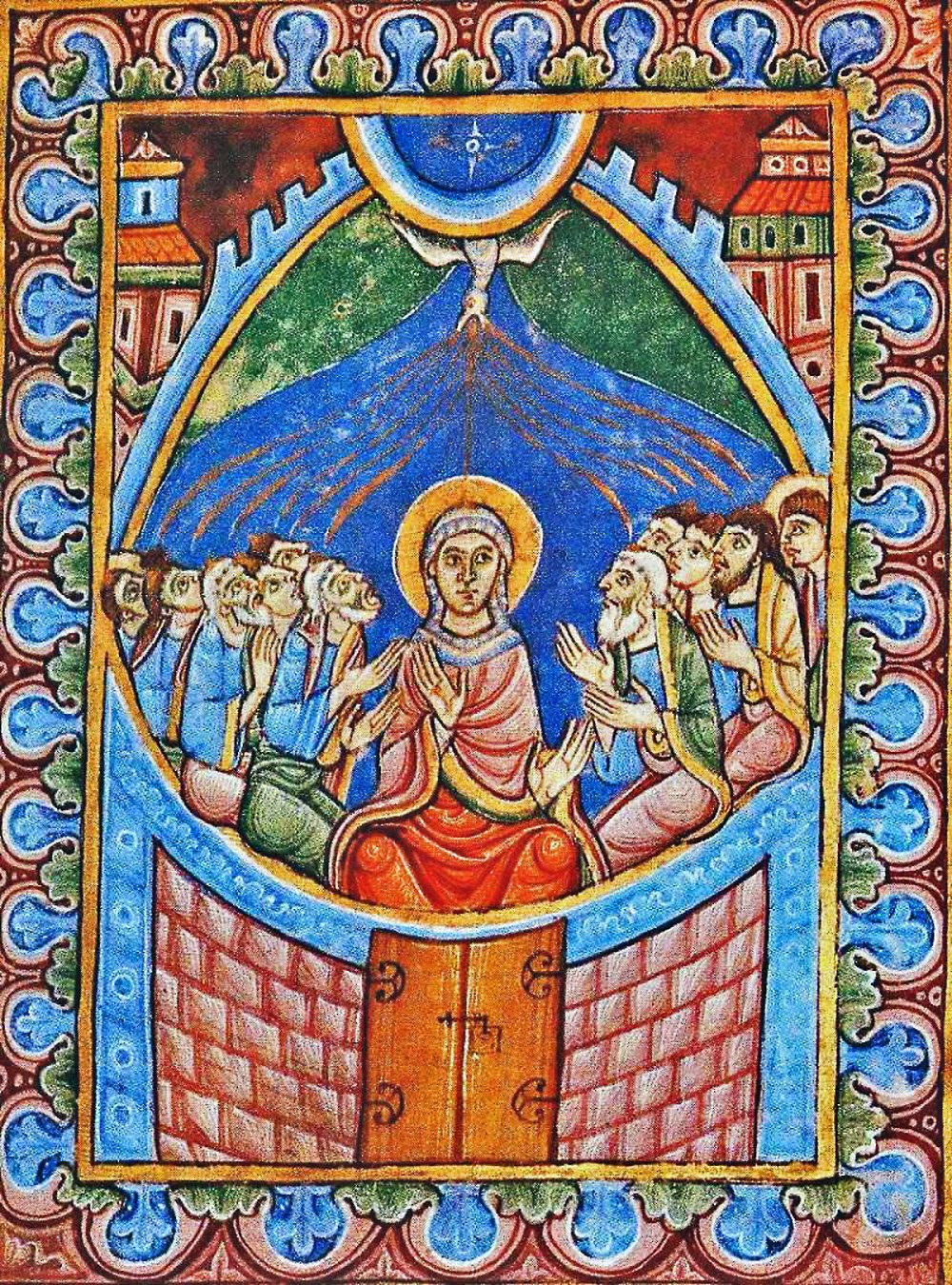
But, now, after seven weeks, we have come to the end of the Easter season with the Solemnity of Pentecost. Sadly, at this point, the Easter flowers have faded, the candlesticks are half-way gone and, in not a few places, the momentum has slowed.  It is as though we were on a roller coaster and the rush of reaching the topmost part of the ride has faded as we reach the end.

Our general treatment of Pentecost perplexes me.  This day marks the occasion when we experienced the full throttle effect of the Holy Spirit in all His glory, His breadth and His Depth.  Yes, the Holy Spirit has always been present throughout salvation history, albeit subtly in the Old Testament in veiled forms, such as the "glory cloud".  We first see Him manifested in the infancy narratives of Christ, when the Archangel Gabriel tells the young Blessed Virgin Mary that the power of the Holy Spirit will overshadow her and she will conceive Jesus.  Some 30 years later, we see the first visible manifestation of the Blessed Trinity when St. John the Baptist baptizes Jesus in the Jordan River.  The Father's voice proclaims Christ as His Son while the Holy Spirit, taking the form of a dove, descends upon Jesus.

In John's Gospel, Jesus speaks of the Holy Spirit to Nicodemus.  Later on, in His Farewell Discourse during the Last Supper, Jesus tells the remaining 11 Apostles that He will be sending them an Advocate, the Paraclete, who will  be with them.  Then, the evening of the Resurrection, when Jesus speaks to the surviving Apostles, sans St. Thomas, He breathes on them and tells them to "receive the Holy Spirit." The Holy Spirit is the breath of God.

In St. Luke's Gospel and in his sequel, the Acts of the Apostles, the beloved physician notes that Christ tells the 11 to remain in Jerusalem to await the Paraclete.   St. Luke notes that the Blessed Mother joins the Apostles during their nine days of prayer, the first Novena.  Then, on Pentecost, the Holy Spirit roars through the Upper Room like a fierce wind and tongues of fire descend on the heads of the Blessed Mother and the Apostles.  Then, courage overtakes them and the Apostles leave that same Upper Room that they had locked themselves in out of fear and go and boldly proclaim Christ to the crowds gathered below.  Peter begins to energetically preach his first "homily" to the crowds and the rest of the Apostolic band goes out into the crowds.  Each person in that vast assembly can hear the Apostles in his own native tongue.  The punishment of Babel has been undone.

That should be enough to infuse us and fill us with Apostolic zeal, and certainly a great love for the Holy Spirit.  Yet, we do not give this monumental feast the joy, the beauty, the solemnity and the majesty that it deserves.  Why does Pentecost matter?  Do we know understand the significance of this feast or have we just reduced it to a celebration of the Church's birthday?

It's as though I am echoing the frustrations of Charlie Brown when he laments that his fellow Peanuts have lost the real meaning of Christmas.  Then, Linus shows up and recites St. Luke's Gospel account of the Nativity.

Almost on cue, a successor to Pope St. Linus, now steps forward to remind this scribe, and, hopefully those of you who are reading, just why Pentecost matters.  From Pope Benedict XVI comes this beautiful homily that he preached during the Mass of Pentecost back in 2008:


Dear Brothers and Sisters,St Luke places the account of the event of Pentecost that we heard in the First Reading in the second chapter of the Acts of the Apostles. The chapter is introduced by the words: "When the day of Pentecost had come, they were all together in one place" (Acts 2: 1). These words refer to the previous setting in which Luke described the small company of disciples that had gathered perseveringly in Jerusalem after Jesus' Ascension into Heaven (cf. Acts 1: 12-14). It is a description rich in detail: the place "where they were staying" - the Cenacle - was an "Upper Room"; the 11 Apostles are listed by name and the first three are Peter, John and James, the "pillars" of the community; mentioned with them are "the women" and "Mary the Mother of Jesus, and "his brethren", already an integral part of this new family, no longer based on blood ties but on faith in Christ. 
The total number of people which was "about a hundred and twenty", a multiple of the "Twelve" of the Apostolic College, alludes to this "new Israel". The group constitutes an authentic "qlhll", an "assembly" in accordance with the model of the First Covenant, the community summoned to listen to the Lord's voice and to walk in his ways. The Acts of the Apostles stresses that "[a]ll these with one accord devoted themselves to prayer" (1: 14). Prayer, therefore, is the principle activity of the nascent Church through which she receives her unity from the Lord and lets herself be guided by his will, as shown by the decision to cast lots in order to elect the one who would take Judas' place (cf. Acts 1: 26).
This community was gathered in the same place, the Upper Room, on the morning of the Jewish Feast of Pentecost, the feast of the Covenant which commemorated the Sinai event, when God, through Moses, proposed that Israel be his own possession among all peoples to be a sign of his holiness (cf. Ex 19). According to the Book of Exodus, that ancient pact was accompanied by a terrifying manifestation of power by the Lord when we read: "Mount Sinai was wrapped in smoke, because the Lord descended upon it in fire; and the smoke of it went up like the smoke of a kiln, and the whole mountain quaked greatly" (Ex 19: 18). We find the elements of wind and fire in the Pentecost of the New Testament, but untainted by fear. The fire specifically took the form of tongues of flame which settled on each one of the disciples who "were all filled with the Holy Spirit" and through the effect of this outpouring "began to speak in other tongues" (Acts 2: 4). It was a true and proper "baptism" of fire of the community, a sort of new creation. At Pentecost, the Church was not established by human will but by the power of God's Spirit. And it is immediately clear how this Spirit gives life to a community which is at the same time one and universal, thereby overcoming the curse of Babel (cf. Gn 11: 7-9). Indeed, it is only the Holy Spirit who creates unity in love and in the reciprocal acceptance of diversity which can free humanity from the constant temptation to acquire earthly power that seeks to dominate and standardize all things. 
"Societas Spiritus", a society of the Spirit, is what St Augustine calls the Church in one of his homilies (71, 19, 32: PL 38, 462). However, prior to him St Irenaeus had already formulated a truth which I would like to recall here: "Where the Church is, there also is God's Spirit; where God's Spirit is, there is the Church and every grace; and the Spirit is the truth; to distance oneself from the Church is to reject the Spirit", and thus "exclude oneself from life" (Adversus Haereses III, 24, 1). Beginning with the event of Pentecost this union between Christ's Spirit and his Mystical Body, in other words the Church, was fully manifest. I would like to reflect on a particular aspect of the Holy Spirit's action, that is, the manner in which multiplicity and unity are interwoven. The Second Reading speaks of this, addressing the harmony of the different charisms in the communion of the same Spirit. But already in Acts we heard the account of this interweaving which is revealed with extraordinary clarity. In the event of Pentecost it becomes clear that many languages and different cultures are part of the Church; in faith they can be understood and make one another fruitful. St Luke aims unambiguously to convey a fundamental idea, which is, that the very act of the Church's birth is already "catholic" or universal. From the outset the Church speaks in all languages, because the Gospel entrusted to her is destined for all peoples, according to the will and mandate of the Risen Christ (cf. Mt 28: 19). The Church which is born at Pentecost is not primarily a particular Community - the Church of Jerusalem - but the universal Church, which speaks the languages of all peoples. From her other communities were to be born in every part of the world, particular Churches which are all and always actualizations of the one and only Church of Christ. The Catholic Church is therefore not a federation of Churches but a single reality: the universal Church has ontological priority. A community which was not catholic in this sense would not even be a Church. 
In this regard, it is necessary to add another aspect: that of the theological vision of the Acts of the Apostles concerning the journey to Rome of the Church of Jerusalem. Among the peoples represented in Jerusalem on the Day of Pentecost, Luke also mentions "visitors from Rome" (Acts 2: 10). At that time Rome was still distant, "foreign" to the newborn Church: it was a symbol of the pagan world in general. But the power of the Holy Spirit was to guide the footsteps of the witnesses "to the end of the earth" (Acts 1: 8), even to Rome. The Acts of the Apostles ends precisely when St Paul, through a providential plan, reaches the capital of the Empire and proclaims the Gospel there (cf. Acts 28: 30-31). Thus the journey of the Word of God which began in Jerusalem reached its destination, because Rome represents the entire world and therefore embodies Luke's idea of catholicity. The universal Church is brought into being, the Catholic Church, which is the extension of the Chosen People and makes its history and mission her own. 
At this point, and to conclude, John's Gospel offers a word that harmonizes very well with the mystery of the Church created by the Spirit. The word that came twice from the lips of the Risen Jesus when he appeared among his disciples in the Upper Room on the evening of Easter Day: Shalom - "peace be with you!" (Jn 20: 19, 21). The expression "shalom" is not a mere greeting; it is far more: it is the gift of peace promised (cf. Jn 14: 27) and won by Jesus at the price of his blood, it is the fruit of his victory in the battle against the spirit of evil. Thus, it is a peace "not as the world gives" but as God alone can give it.
On this feast of the Spirit and the Church, let us thank God for having given to his people, chosen and formed in the midst of all peoples, the precious good of peace, of his peace! At the same time, let us renew the awareness of the responsibility that is connected with this gift: the Church's responsibility to be, constitutionally, a sign and instrument of God's peace for all peoples. I sought to pass on this message recently by going to the Headquarters of the United Nations Organization in order to address my words to the representatives of the peoples. However, we must not only think of these events "at the summit". The Church carries out her service to Christ's peace above all in the ordinary presence and action among men and women, with the preaching of the Gospel and the signs of love and mercy that accompany it (cf. Mk 16: 20). 
Of course, among these signs it is mainly the Sacrament of Reconciliation that should be emphasized. The Risen Christ instituted it at the very moment he gave the disciples his peace and his Spirit. As we heard in the Gospel passage, Jesus breathed on the Apostles and said: "Receive the Holy Spirit. If you forgive the sins of any, they are forgiven; if you retain the sins of any, they are retained" (Jn 20: 22-23). How important and, unfortunately, insufficiently understood is the gift of Reconciliation which sets hearts at rest! Christ's peace is only spread through the renewed hearts of reconciled men and women who have made themselves servants of justice, ready to spread peace in the world with the force of the truth alone, without descending to compromises with the world's mentality because the world cannot give Christ's peace: this is how the Church can be the leaven of that reconciliation which comes from God. She can only be so if she remains docile to the Spirit and bears witness to the Gospel, only if she carries the Cross like Jesus and with Jesus. The saints of every epoch witness precisely to this! 
In the light of this word of life, dear brothers and sisters, may the prayer we are raising to God in spiritual union with the Virgin Mary become ever more fervent and intense. May the Virgin of listening, the Mother of the Church, obtain for our communities and for all Christians a renewed outpouring of the Holy Spirit, the Paraclete. "Emitte Spiritum tuum et creabuntur, et renovabis faciem terrae - Send forth your Spirit, and they shall be recreated, and you shall renew the face of the earth". Amen.

But, how do we celebrate this grand solemnity?  How can we re-infuse the same zeal we experienced for the Easter Vigil into the Pentecost Vigil?   In 2002, the third typical edition of the Roman Missal put into place an actual Vigil Mass for the Solemnity of Pentecost, using the Easter Vigil as the framework for the Liturgy of the Word  The English-speaking world was introduced to this when the revised translation was released in 2011. The four optional Old Testament Readings are now proclaimed in a manner similar to that employed for the Easter Vigil:  Prayer, Reading and Psalm, and then Prayer.  The beauty with this format is that it allows us to rediscover the presence of the Holy Spirit throughout salvation history. We see how the Holy Spirit has existed from even before the foundation of the world.  In Ezekiel, the third reading, we read how the prophet preaches to the dry bones and how these bones slowly take on flesh and then, at the end, the Spirit breathes life into them, just as He breathed life into the nostrils of Adam. The Epistle and the Gospel are then proclaimed in the usual manner.  The Gospel, in this case is, comes from the seventh chapter of St. John's account, wherein Jesus invites us, exclaiming, "Let anyone who thirsts come to me and drink."  He speaks of living waters, almost prophetically pointing out to the water (and blood) that will flow from his pierced side.

Sadly, the missallette publishing houses completely ignored the beauty of the vigil, opting to only print the old format.  The publishing houses did not even include the corresponding psalms so that parishes could make full use of the majesty of the Pentecost Vigil.  This is sad because it cheats parishes from celebrating the Pentecost Vigil as it should be.  We cannot let the publishing houses, who have no more ecclesial authority than I do, dictate how we should mark this important feast in the life of the Church.

We need to retake the Pentecost Vigil and celebrate this magnificent feast in a manner worthy of the grand mystery that it marks.  The Third Person of the Trinity deserves nothing less.  Veni Creator Spiritus!


Monday, April 22, 2013

Even during Easter, Judas remains


Five weeks ago, we heard the account of the Passion of Our Lord wherein we went back to the precious, most sacred moments of Christ's suffering.  Judas' painful, selfish betrayal set the events in motion.

Now, as we begin the Fourth Week of Easter, one day removed from Good Shepherd Sunday, the specter of Judas returns, as one of Pope Emeritus Benedict's former assistants spews vitriol against the beloved former Supreme Pontiff.  In an interview published by the Vatican Insider, Archbishop Piero Marini lashes out uncharitably at Benedict in much the same manner that Roger Cardinal Mahony did when he tweeted his snide remarks in the wake of the election of Pope Francis.

In part, Marini told La Stampa (known in English as the Vatican Insider):
"Its a breath of fresh air; its opening a window onto springtime and onto hope. We had been breathing the waters of a swamp and it had a bad smell. Wed been in a church afraid of everything, with problems such as Vatileaks and the paedophilia scandals. With Francis were talking about positive things". With the new Pope, added Mgr. Marini, "theres a different air of freedom, a church thats closer to the poor and less problematic".
For those of us who are still wading through the transitionary period, Marini's comments only make things harder.  He certainly did not help things any.  The words were hurtful and spiteful, tantamount to a betrayal of the man whom he had served for roughly three years.


That Piero Marini and Benedict had vastly different liturgical views is well-known.  However, Benedict treated the Master of Ceremonies that he had inherited from Blessed John Paul II with dignity and respect.  Whatever disagreements they may have had, liturgically speaking, were handled quietly.  When Benedict chose Msgr. Guido Marini as his new Papal MC, he assigned Piero Marini to serve as President of Eucharistic Congresses.  While it may not have been a high-profile position, Marini still retained some sort of office.  It was not as though Benedict had sent him completely to liturgical Siberia, as Pope Paul VI had done to Piero Marini's mentor, Archbishop Bugnini, the architect of the liturgical reforms of the Second Vatican Council.

Archbishop Marini's harsh comments call to mind similar remarks that Judas had made when the woman had anointed Jesus with the costly spikenard.  It seems to me that Archbishop Marini, like Judas, cared more about himself than about his leader.

The Vatican seems strangely silent on Archbishop Marini's words, apparently taking the same stance it took when Cardinal Mahony unleashed his Twitter tirade.  I do not believe this to be the right approach.  Granted, we are in unchartered waters because we have two living Popes, one current and one in retirement; nonetheless, it would only be right for Pope Francis to put a stop to all of this nonsense and request that both Piero Marini and Mahony cease and desist.  True reform comes when you start cleaning up your own house, and this includes errant Cardinals and Archbishops who should know better.

Sunday, April 21, 2013

Reflections from a Shepherd


Friday, April 19th, marked the eighth anniversary of the election of the former Joseph Cardinal Ratzinger as Supreme Pontiff of the Universal Church. For not a few of us, the events of April 19, 2005, brought sheer joy as we heard the name "Josephum" pronounced when the "Habemus Papam" announcement came.

The joy was not fleeting for the new Pope ushered in a period of authentic liturgical renewal, something many of us believed that the Church needed (and still does).  What he wrote in his famous book, The Spirit of the Liturgy, Pope Benedict XVI slowly brought to life.  He taught us that liturgy matters.  In fact, his first homily as Pope gave us insight into the direction he would lead his flock.

Preached on April 20, 2005, in his first Mass as Supreme Pontiff, Benedict XVI touched on the importance of the Holy Sacrifice of the Mass:


4. My Pontificate begins in a particularly meaningful way as the Church is living the specialYear dedicated to the Eucharist. How could I fail to see this providential coincidence as an element that must mark the ministry to which I am called? The Eucharist, the heart of Christian life and the source of the Church's evangelizing mission, cannot but constitute the permanent centre and source of the Petrine ministry that has been entrusted to me. 
The Eucharist makes constantly present the Risen Christ who continues to give himself to us, calling us to participate in the banquet of his Body and his Blood. From full communion with him flows every other element of the Church's life:  first of all, communion among all the faithful, the commitment to proclaiming and witnessing to the Gospel, the ardour of love for all, especially the poorest and lowliest. 
This year, therefore, the Solemnity of Corpus Christi must be celebrated with special solemnity. Subsequently, the Eucharist will be the centre of the World Youth Day in Colognein August, and in October, also of the Ordinary Assembly of the Synod of Bishops, whose theme will be:  "The Eucharist, source and summit of the life and mission of the Church". I ask everyone in the coming months to intensify love and devotion for Jesus in the Eucharist, and to express courageously and clearly faith in the Real Presence of the Lord, especially by the solemnity and the correctness of the celebrations. 
I ask this especially of priests, whom I am thinking of with deep affection at this moment. The ministerial Priesthood was born at the Last Supper, together with the Eucharist, as my Venerable Predecessor John Paul II so frequently emphasized. "All the more then must the life of a priest be "shaped' by the Eucharist" (Letter to Priests for Holy Thursday 2005n. 1; ORE, 23 March, p. 4). In the first place, the devout, daily celebration of Holy Mass, the centre of the life and mission of every priest, contributes to this goal. 
5. Nourished and sustained by the Eucharist, Catholics cannot but feel encouraged to strive for the full unity for which Christ expressed so ardent a hope in the Upper Room. The Successor of Peter knows that he must make himself especially responsible for his Divine Master's supreme aspiration. Indeed, he is entrusted with the task of strengthening his brethren (cf. Lk 22: 32).

As the Successor of St. Peter, Benedict believed that he was called to strengthen and confirm his brethren, the same charge that Christ gave to the Prince of the Apostles during the Last Supper.  Strengthening and confirming was something that Benedict continuously did, especially when it came to the Holy Sacrifice of the Mass.  He led by example and sought to have the beauty and majesty of the Papal liturgies he celebrated serve as the model for the Universal Church to follow.

In doing so, Benedict also followed the command that Christ gave to St. Peter, feeding and tending the sheep and lambs entrusted to him.  Benedict fed and tended the flock entrusted to him in many ways, but, the most visible was in the celebration of the Mass and in his definition of what it meant to be a shepherd.  Again, let us look at the words that he preached at the Mass to mark the start of his reign.  Here, he explains the meaning of the Pallium and what is it to be a shepherd:


The first symbol is the Pallium, woven in pure wool, which will be placed on my shoulders. This ancient sign, which the Bishops of Rome have worn since the fourth century, may be considered an image of the yoke of Christ, which the Bishop of this City, the Servant of the Servants of God, takes upon his shoulders. God’s yoke is God’s will, which we accept. And this will does not weigh down on us, oppressing us and taking away our freedom. To know what God wants, to know where the path of life is found – this was Israel’s joy, this was her great privilege. It is also our joy: God’s will does not alienate us, it purifies us – even if this can be painful – and so it leads us to ourselves. In this way, we serve not only him, but the salvation of the whole world, of all history. The symbolism of the Pallium is even more concrete: the lamb’s wool is meant to represent the lost, sick or weak sheep which the shepherd places on his shoulders and carries to the waters of life. For the Fathers of the Church, the parable of the lost sheep, which the shepherd seeks in the desert, was an image of the mystery of Christ and the Church. The human race – every one of us – is the sheep lost in the desert which no longer knows the way. The Son of God will not let this happen; he cannot abandon humanity in so wretched a condition. He leaps to his feet and abandons the glory of heaven, in order to go in search of the sheep and pursue it, all the way to the Cross. He takes it upon his shoulders and carries our humanity; he carries us all – he is the good shepherd who lays down his life for the sheep. What the Pallium indicates first and foremost is that we are all carried by Christ. But at the same time it invites us to carry one another. Hence the Pallium becomes a symbol of the shepherd’s mission, of which the Second Reading and the Gospel speak. The pastor must be inspired by Christ’s holy zeal: for him it is not a matter of indifference that so many people are living in the desert. And there are so many kinds of desert. There is the desert of poverty, the desert of hunger and thirst, the desert of abandonment, of loneliness, of destroyed love. There is the desert of God’s darkness, the emptiness of souls no longer aware of their dignity or the goal of human life. The external deserts in the world are growing, because the internal deserts have become so vast. Therefore the earth’s treasures no longer serve to build God’s garden for all to live in, but they have been made to serve the powers of exploitation and destruction. The Church as a whole and all her Pastors, like Christ, must set out to lead people out of the desert, towards the place of life, towards friendship with the Son of God, towards the One who gives us life, and life in abundance. The symbol of the lamb also has a deeper meaning. In the Ancient Near East, it was customary for kings to style themselves shepherds of their people. This was an image of their power, a cynical image: to them their subjects were like sheep, which the shepherd could dispose of as he wished. When the shepherd of all humanity, the living God, himself became a lamb, he stood on the side of the lambs, with those who are downtrodden and killed. This is how he reveals himself to be the true shepherd: “I am the Good Shepherd . . . I lay down my life for the sheep”, Jesus says of himself (Jn 10:14f). It is not power, but love that redeems us! This is God’s sign: he himself is love. How often we wish that God would make show himself stronger, that he would strike decisively, defeating evil and creating a better world. All ideologies of power justify themselves in exactly this way, they justify the destruction of whatever would stand in the way of progress and the liberation of humanity. We suffer on account of God’s patience. And yet, we need his patience. God, who became a lamb, tells us that the world is saved by the Crucified One, not by those who crucified him. The world is redeemed by the patience of God. It is destroyed by the impatience of man. 
One of the basic characteristics of a shepherd must be to love the people entrusted to him, even as he loves Christ whom he serves. “Feed my sheep”, says Christ to Peter, and now, at this moment, he says it to me as well. Feeding means loving, and loving also means being ready to suffer. Loving means giving the sheep what is truly good, the nourishment of God’s truth, of God’s word, the nourishment of his presence, which he gives us in the Blessed Sacrament. My dear friends – at this moment I can only say: pray for me, that I may learn to love the Lord more and more. Pray for me, that I may learn to love his flock more and more – in other words, you, the holy Church, each one of you and all of you together. Pray for me, that I may not flee for fear of the wolves. Let us pray for one another, that the Lord will carry us and that we will learn to carry one another.
Many of us can say that Benedict certainly did his best to feed and tend the flock entrusted to him on April 19, 2005.  Even though not a few of us were privileged to have attended the Papal Liturgies that he celebrated, we were able to join him through electronic means such as telecasts and internet broadcasts.  I, for one, was nourished by his preaching and united myself in prayer with him even though we were an ocean and several time zones away. The words that Benedict preached and the example that he gave of a proper celebration of the Mass are slowly bearing fruit.

But, being a shepherd also means suffering for the flock.  While Benedict's suffering may not have been as publicly visible as that of Blessed John Paul II, nonetheless, the Bavarian pontiff certainly had a heavy cross to bear.  It was only after his retirement, that we have seen the physical toll it has taken on his body.  Yet, Benedict continues to present himself as a daily oblation to Christ on behalf of the Church.  In fact, Benedict once said that the priest must continuously offer himself as an oblation to God for the Church.  In this way, he is truly an Altar Christus, uniting his sacrifice to that of the Lamb.

In one of the Prefaces that the celebrant ues during the Easter Season, he prays that

By the oblation of his Body,
he brought the sacrifices of old to fulfillment
in the reality of the Cross
and, by commending himself to you for our salvation,
showed himself the Priest, the Altar and the Lamb of sacrifice.

This section of the Preface calls to mind what we heard in today's second reading from the Book of Revelation, wherein the Lamb who was sacrificed now leads the innumerable throng of believers.  As Benedict said, God stands on the side of the lambs.

On this Good Shepherd Sunday, then, let us pray for both Pope Emeritus Benedict XVI and his successor, Pope Francis, that the Lord may strengthen them and sustain them.  Even though one shepherd is retired, he still looks out for the good of the flock.  Even though he remains hidden from us,  he continues to offer himself as a spiritual victim for the good of the Church.  For Pope Francis, I pray that the Lord will sustain him in his ministry.